
Key Takeaways:
California customers have missed an estimated $110 million in staking rewards because the state restricted Coinbase’s staking providers in 2023.Coinbase argues that staking shouldn’t be a safety and says no consumer has ever misplaced belongings by staking on its platform.The trade is urging California regulators to align with 46 different U.S. states and help a transparent federal staking framework.
Coinbase has intensified its public marketing campaign to restore crypto staking providers for California customers, highlighting what it calls a expensive and pointless restriction that has already disadvantaged residents of considerable revenue.

Coinbase Ramps Up Strain Over California Staking Ban
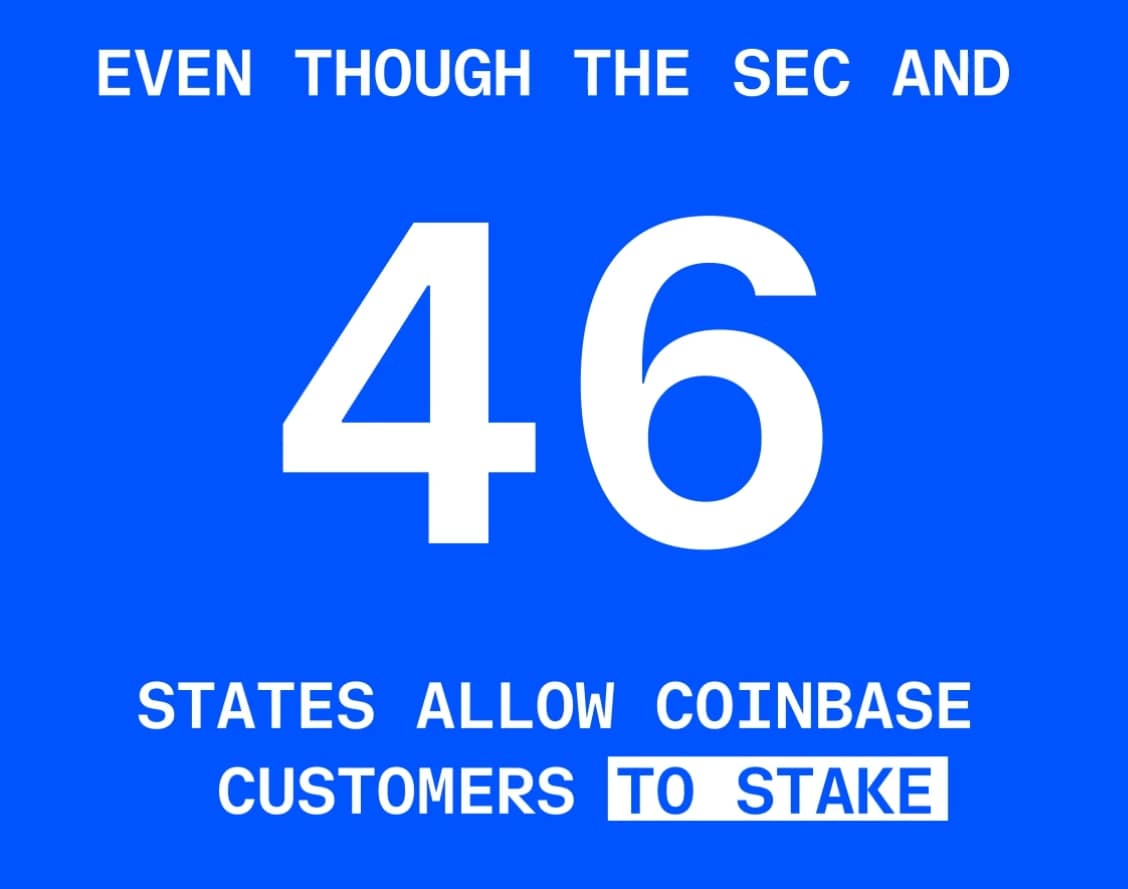
Since June 6, 2023, California residents have been unable to entry Coinbase’s staking providers after state regulators moved to limit the providing. Whereas customers in 46 different states proceed to earn staking rewards by means of the platform, Californians stay locked out.
Coinbase says the affect is now not theoretical. In keeping with the corporate, customers in California have missed out on roughly $110 million in potential staking rewards over the previous two years. The trade frames the determine as misplaced revenue for on a regular basis crypto holders moderately than a profit to Coinbase itself.
In a sequence of public posts, Coinbase burdened three core claims: staking shouldn’t be a safety, prospects have by no means misplaced belongings by means of Coinbase staking, and California residents are being handled unfairly in contrast with customers elsewhere within the U.S.
The corporate is now immediately urging Californians to contact state officers and demand an finish to what it calls a “misguided” coverage.
Learn Extra: Coinbase Permits All Solana Token Buying and selling for 100M Customers in Main On-Chain Growth
Why California Stands Aside From Many of the U.S.
The dispute traces again to actions taken by the California Division of Monetary Safety and Innovation, which issued a desist-and-refrain order towards sure staking merchandise in mid-2023. Regulators argued that staking providers may fall beneath securities legal guidelines, requiring extra registration and oversight.
Coinbase strongly disagrees with that interpretation. The corporate maintains that staking merely permits customers to take part in blockchain consensus mechanisms and earn protocol-level rewards, not earnings generated by Coinbase’s efforts.
From Coinbase’s perspective, California has develop into an outlier. Nearly all different states within the U.S. permit staking beneath their jurisdictions, and no related enforcement proceedings have brought about client losses on a mass degree.

The $110 Million Query: What Customers Really Misplaced
The $110 million loss calculated by Coinbase is consultant of the cumulative reward attainable for California residents since 2023, had they continued to learn from the service. Though the person losses are tough to quantify, the overall significance highlights the significance of rewards, particularly throughout instances of excessive community rewards.
The staking reward system usually operates as an incentive system that enables the long-term holding neighborhood to hedge market volatility or as a passively earned revenue mechanism that incentivively reinvests funds in different cryptocurrencies. California customers are thus left with the selection to forego staking or look elsewhere than Coinbase.
That shift introduces extra friction, particularly for retail customers preferring regulated, U.S.-based platforms over offshore or self-custody options that require higher technical experience.
Learn Extra: Coinbase Makes Its Largest Solana Push But with Strategic Acquisition of Vector’s Buying and selling Tech
Staking, Securities, and the Regulatory Grey Zone
On the heart of the dispute is a well-recognized query in U.S. crypto regulation: whether or not staking providers must be handled as securities choices.
Coinbase argues the reply is not any. In keeping with the corporate, staking rewards come immediately from blockchain protocols, not from managerial or entrepreneurial efforts by Coinbase. Customers retain possession of their belongings, and Coinbase acts solely as a technical facilitator.
The trade additionally emphasizes its observe document. Since launching staking providers, Coinbase says no buyer has misplaced belongings because of staking, a degree it makes use of to counter claims that customers want safety from the product.
Regulators, nonetheless, have taken a extra cautious view. California’s stance displays broader issues about client disclosures, threat transparency, and whether or not intermediated staking introduces new layers of obligation beneath securities regulation.
Patchwork Guidelines vs. a Federal Framework
Coinbase says the California case illustrates why state-by-state enforcement is now not workable. In its view, crypto customers mustn’t lose entry to the identical monetary instruments just because they cross state strains.
The corporate is looking for a transparent federal framework that defines staking as soon as, applies constantly nationwide, and removes the uncertainty created by overlapping lawsuits and enforcement actions.