
DeFi’s greatest enchantment at the moment comes from its reward constructions, which, as of 2024, have attracted billions of traders’ {dollars} because of the promise of excessive returns over brief intervals.
Incentive constructions similar to high-yield farming and staking rewards have change into a typical characteristic of the crypto panorama, particularly as a result of they encourage participation by permitting customers to earn passive revenue and alternatives to maximise features rapidly.
Nonetheless, these programs can inadvertently foster fraud and unsustainable tasks. Tasks providing excessively excessive returns threat turning into Ponzi schemes, the place early traders profit on the expense of later ones. A notable instance is Iron Finance’s collapse in June 2021, when a stablecoin peg failure led to a $2 billion loss for traders.
The Drawback with Overly Engaging Incentives
Whereas excessive rewards create an phantasm of alternative and drive fast progress and investor curiosity within the brief time period, this typically comes on the expense of long-term sustainability. Tasks targeted on extraordinary returns to draw members are sometimes arrange for failure. The attract of excessive yields results in speculative behaviour and unsustainable monetary fashions.
As we study the pitfalls of those incentive constructions, it turns into clear that whereas they might enhance liquidity and preliminary curiosity, they steadily fail to assist long-term challenge well being.
The Give attention to Brief-Time period Features As an alternative of Lengthy-Time period Sustainability
Tasks providing excessive rewards typically entice liquidity and provides the impression of sturdy progress. Nonetheless, this inflow of liquidity is commonly unsustainable, resulting in eventual collapse when new funds cease flowing in.
A traditional instance is the Iron Finance collapse talked about earlier. The challenge initially attracted a surge of liquidity with guarantees of exceptionally excessive returns. Traders flocked to capitalize on these rewards, believing that they had discovered a profitable alternative within the challenge’s stablecoin ecosystem. Nonetheless, the rewards relied closely on new liquidity inflows fairly than on substantial worth creation.
When the liquidity dried up, Iron Finance skilled what is commonly known as a “financial institution run.” Traders scrambled to withdraw their funds, leading to a catastrophic collapse that worn out almost $2 billion in worth in a single day. This highlights a essential challenge: these reward constructions can create unsustainable booms that inevitably result in busts, leaving traders in monetary break.
As well as, tasks that focus closely on short-term incentives can distort their long-term targets. As an alternative of prioritizing sustainable improvement, they shift towards appeasing early members. This creates a vicious cycle, the place rewards are frequently raised to keep up investor curiosity, resulting in bubbles that inevitably burst. When a challenge guarantees rewards that far outpace market averages, it typically alerts that returns are being subsidised by newly launched liquidity fairly than true worth era.
An analogous challenge occurred with SushiSwap, which confronted liquidity supplier withdrawals as rewards decreased, displaying how short-term incentives can erode a challenge’s basis.
It Encourages Fraud and Ponzi Schemes
Overly enticing incentives typically disguise fraudulent schemes, significantly these resembling Ponzi constructions. These schemes seem to thrive so long as new funds hold flowing in, however they’re constructed on shaky foundations. When new members decelerate, the construction collapses.
Bitconnect is probably essentially the most infamous instance of a Ponzi-like scheme within the crypto house. At its top, the platform promised returns of over 40% per thirty days to customers who lent out their Bitcoin on the platform. This unbelievable fee of return attracted an enormous variety of traders, a lot of whom had been unaware that the deposits of recent members had been funding their returns. When it grew to become not possible to maintain these payouts, the platform collapsed in 2018, inflicting large monetary losses.
Ponzi-like constructions flourish within the crypto house because of the speculative nature of the market. The worry of lacking out (FOMO) and hype typically drive traders into these schemes with out clearly understanding the dangers concerned. When new members can now not prop up the construction, the challenge collapses, leaving those that invested too late to undergo vital losses.
This challenge is compounded by crypto’s decentralized nature, the place accountability is commonly unclear, and authorized repercussions for fraud will be troublesome to implement. Builders can design these schemes to fail, strolling away with the income and leaving customers with little recourse. This, in the long term, tarnishes the credibility of all the crypto ecosystem as a result of it makes it troublesome for reliable tasks to construct belief. A outstanding instance is the collapse of the Compounder DeFi challenge in 2020, the place builders launched a backdoor within the code, permitting them to empty customers’ funds after traders poured tens of millions into yield farming.
The Publicity to Hacks and Moral Dilemmas
Whereas many builders genuinely goal to construct progressive and precious tasks, the drive for prime rewards can result in moral lapses and demanding safety vulnerabilities. Excessive rewards entice not solely traders but in addition hackers and malicious actors looking for to take advantage of weaknesses in a challenge’s code or protocol.
Good contracts, that are the spine of many DeFi tasks, aren’t infallible. These automated contracts execute transactions with out the necessity for intermediaries, however they can be liable to bugs and vulnerabilities if not totally examined. When these flaws are discovered, they typically relate on to the very mechanisms designed to reward customers. For instance, Harvest Finance, a high-yield farming challenge, attracted vital consideration with its promise of excessive returns. Nonetheless, in 2020, it was exploited by means of a flash mortgage assault that drained $34 million from the platform. The vulnerability existed due to flaws within the reward construction, which dangerous actors had been in a position to manipulate.
Equally, in 2021, the Poly Community was hacked because of weaknesses in its protocol design. The hacker exploited these vulnerabilities to steal over $600 million. Though the funds had been later returned, the incident highlighted how inclined DeFi tasks are to assault when their incentive mechanisms are poorly applied.
From an moral standpoint, builders face a dilemma: ought to they provide large rewards to draw customers rapidly, or ought to they prioritize the safety and sustainability of their tasks? Sadly, in lots of circumstances, the lure of fast income overshadows the necessity for long-term stability. Builders who prioritize excessive incentives with out correct safeguards put not solely their tasks but in addition their customers in danger.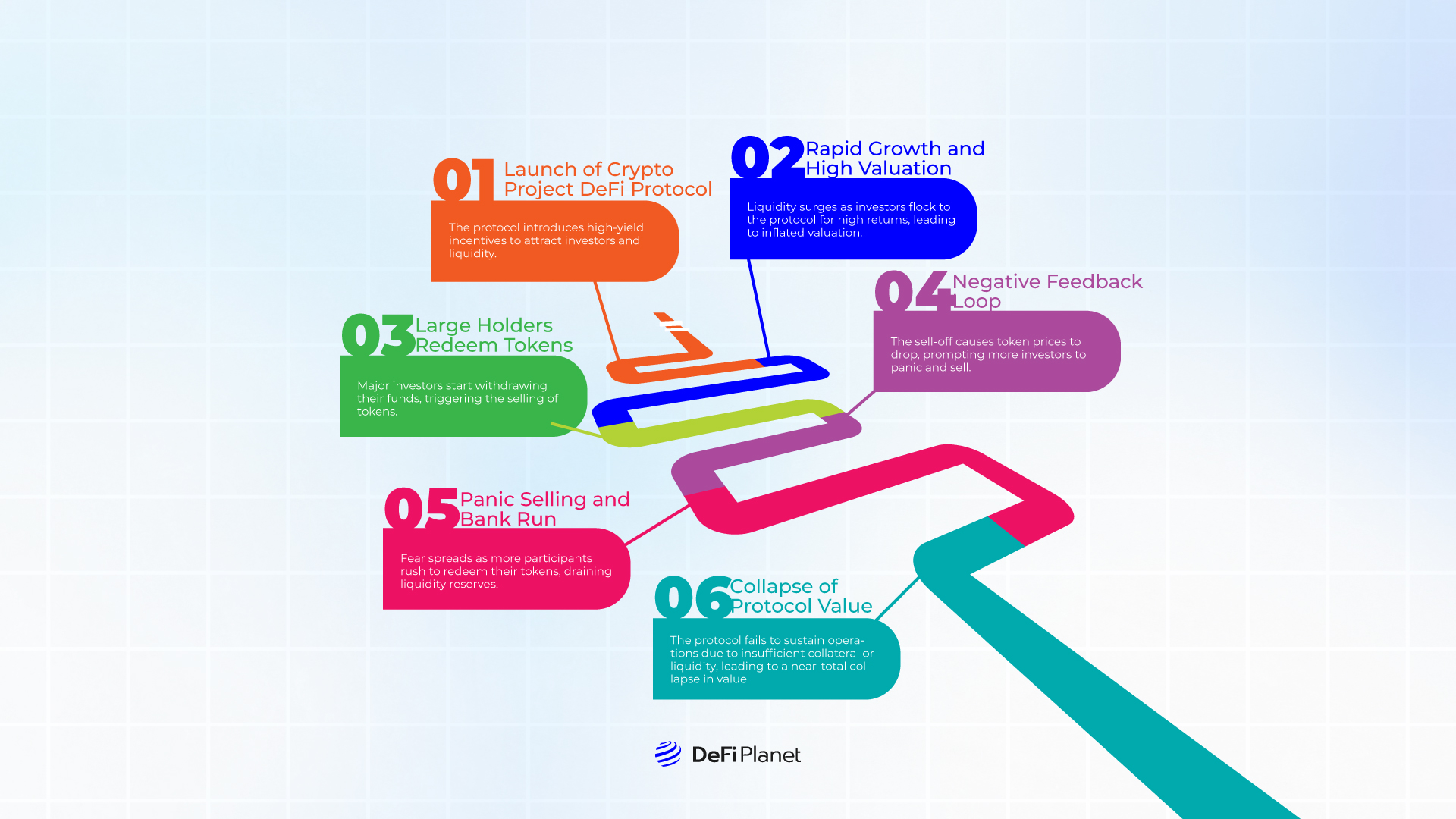
Sustainable Alternate options to Excessive-Danger Incentives
To foster long-term progress within the crypto house, builders and members should prioritize sustainability over short-term features. As an alternative of promising sky-high yields, tasks ought to concentrate on practical rewards and utility-driven tokenomics, as seen with Aave and Uniswap.
Time-locked vesting schedules, like these utilized by Curve Finance, can additional stabilize ecosystems by curbing speculative liquidity outflows. Clear audits, common updates, and group engagement—as practised by Yearn Finance—are essential to sustaining belief.
Moral issues ought to be on the forefront when designing incentive constructions. Unsustainable reward programs can create a way of urgency amongst members, main them to behave recklessly with out absolutely understanding the dangers. Undertaking creators ought to goal to foster a balanced ecosystem that rewards customers pretty whereas guaranteeing the long-term viability of the platform. This consists of being clear concerning the dangers concerned and setting practical expectations for returns.
On the facet of traders and members, selling due diligence, transparency, and academic initiatives will assist construct a resilient group. Traders ought to search verified and clear info to allow them to make knowledgeable choices. Traders should keep away from the temptation of unsustainable returns and totally perceive the tasks they spend money on.
IMAGE 2
Rethinking the DeFi Paradigm
The hazards of aggressive crypto incentives are simple—they foster a panorama that rewards unsustainable tasks, invitations fraud, and encourages exploitation. However this doesn’t need to be the way forward for decentralized finance (DeFi). As members and contributors to this ecosystem, we should rethink the foundations upon which progress is constructed. Are we fueling a speculative frenzy, or are we making a future that fosters safety, transparency, and long-term worth?
It’s time to maneuver past the short-sighted pursuit of fast income. The trade should shift its focus from token-based hype cycles to the creation of sturdy, clear tasks that prioritize belief and integrity. Not each DeFi challenge wants a token to succeed. Builders ought to query the necessity to incentivize reckless hypothesis and as a substitute design programs which might be safe, secure, and pushed by true worth creation.
Traders, too, have a essential function to play. Quite than chasing unsustainable returns, they have to take the time to grasp the dangers and long-term viability of the tasks they assist. This shift in mentality is essential for the way forward for the sector.
Main tasks like Aave and Uniswap, which prioritize transparency, safety, and utility-driven incentives, supply a blueprint for what a more healthy DeFi ecosystem can appear like. They function examples of how decentralized finance can evolve from its speculative roots into a strong, fraud-resistant monetary system.
The way forward for DeFi hinges on a collective resolution: Can we proceed down the trail of unsustainable progress, or will we prioritize schooling, safety, and long-term viability? By shifting our focus, we can assist form a decentralized monetary system that advantages everybody, fairly than simply the fortunate few. It’s time for all the ecosystem to rethink its strategy—as a result of the success of DeFi will depend on it.
Disclaimer: This text is meant solely for informational functions and shouldn’t be thought-about buying and selling or funding recommendation. Nothing herein ought to be construed as monetary, authorized, or tax recommendation. Buying and selling or investing in cryptocurrencies carries a substantial threat of economic loss. All the time conduct due diligence.
If you want to learn extra market analyses like this, go to DeFi Planet and observe us on Twitter, LinkedIn, Fb, Instagram, and CoinMarketCap Neighborhood. “Take management of your crypto portfolio with MARKETS PRO, DeFi Planet’s suite of analytics instruments.”