
Blockchain know-how and DeFi face a serious barrier to widespread adoption: the remoted nature of particular person blockchain networks. Customers on one blockchain, equivalent to Ethereum, can’t simply work together with others like Bitcoin or Cardano. This isolation forces customers to unfold property throughout completely different chains and requires builders to handle separate ecosystems.
At present, customers navigate between completely different blockchains by swapping tokens via exchanges (CEXs & DEXs). As an example, if a consumer with Polygon’s MATIC token desires to take part in DeFi on Ethereum, they should commerce MATIC for ETH on a CEX. This course of shouldn’t be solely time-consuming and dear attributable to gasoline charges, however it additionally undermines the ecosystem’s elementary precept of decentralization. The collapse of FTX and the ensuing losses for its prospects spotlight the dangers of counting on centralized entities for crypto transactions.
The idea of “cross-chain compatibility” presents an answer to those challenges. Its implementation permits customers and builders to work together with DeFi platforms with out being restricted to a single community’s guidelines and property.
Why Cross-Chain Compatibility in DeFi is Vital
Cross-chain compatibility refers back to the skill of various blockchain networks to work together with one another seamlessly. Which means property, knowledge, and sensible contracts can transfer freely between chains, making a extra unified and environment friendly DeFi ecosystem. Right here’s how cross-chain compatibility addresses the present challenges:
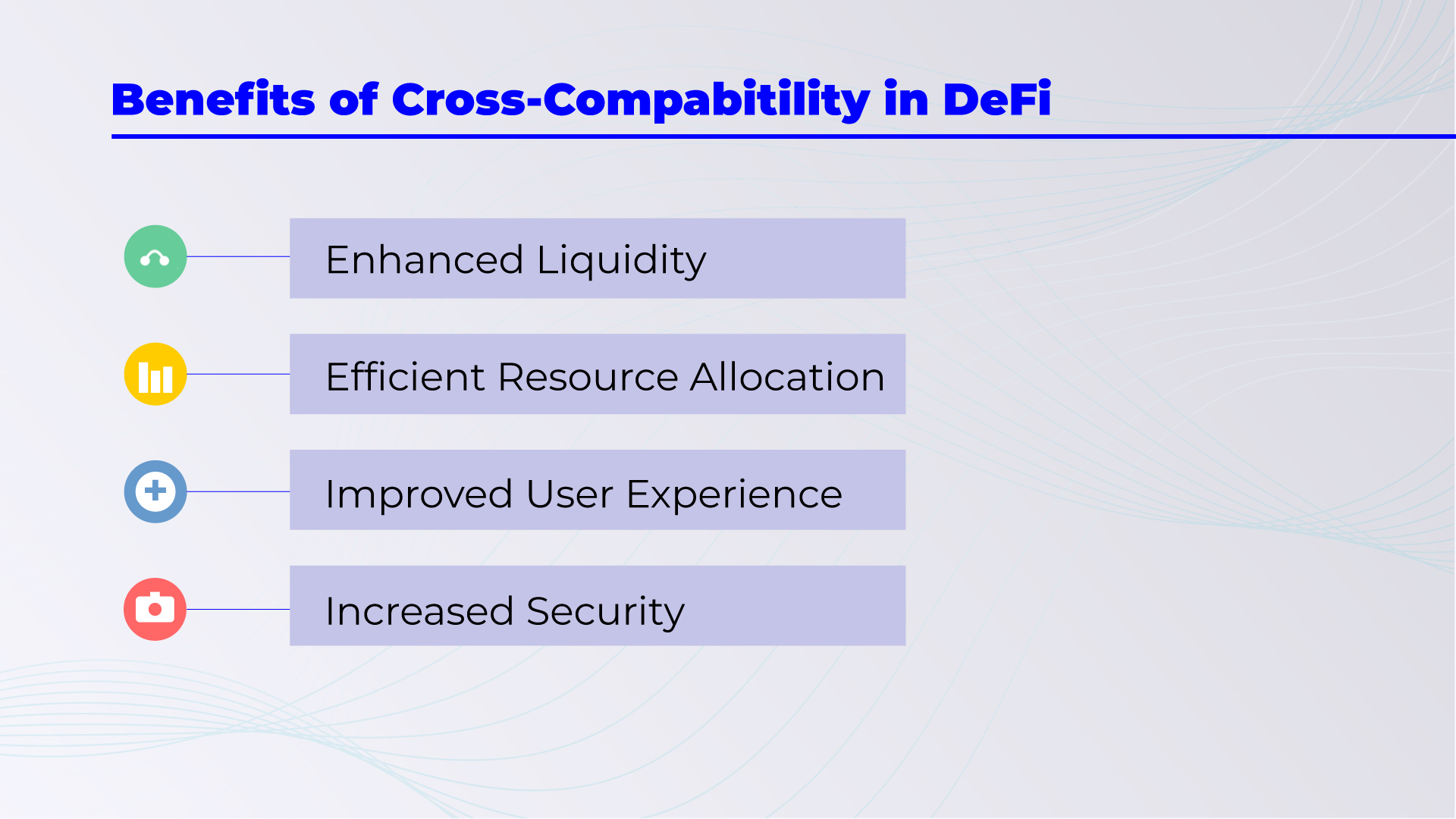
Addressing Liquidity Fragmentation
One main problem in DeFi is liquidity fragmentation. Customers unfold their property throughout a number of blockchains like Ethereum, Cardano, and Solana. This scattering of property means customers can’t simply use them collectively in a single DeFi technique, limiting their buying and selling, lending, and borrowing effectivity.
Cross-chain compatibility solves this by letting customers pool their property from completely different blockchains right into a single liquidity pool. This boosts total liquidity within the DeFi house, makes the markets develop into extra secure and fewer susceptible to massive value swings, and thus engaging.
Environment friendly Assets Allocation
One other concern is the inefficient use of assets. Builders should create and preserve separate variations of their functions for every blockchain. This not solely will increase growth time and prices however also can result in inconsistencies throughout platforms, affecting consumer expertise.
Cross-chain compatibility presents an answer by enabling builders to construct functions that work throughout a number of blockchains without having to create separate variations for each. This reduces growth prices and time, and ensures a extra constant consumer expertise throughout platforms. Builders can focus extra on innovating and bettering their functions somewhat than managing a number of variations, resulting in higher-quality DeFi merchandise.
Enhancing Consumer Expertise
Customers typically have to swap tokens via CEXs to maneuver property between blockchains. This course of is cumbersome, incurs excessive charges, and introduces dangers related to centralization.
Cross-chain compatibility simplifies this by permitting customers to maneuver property between blockchains with out counting on CEXs. This streamlines the method, reduces charges, and maintains the decentralized nature of DeFi, and thus, a smoother and extra environment friendly consumer expertise. Simplified asset transfers imply customers can react extra swiftly to market alternatives and adjustments, enhancing their skill to handle their portfolios successfully.
Mitigating Safety Dangers
Utilizing CEXs for token swaps exposes customers to the danger of hacks, fraud, and mismanagement. Cross-chain compatibility mitigates these dangers by eliminating the necessity for centralized exchanges to facilitate cross-chain transactions. As a substitute, cross-chain protocols use decentralized mechanisms to switch property, decreasing the potential for fraud and mismanagement and enhancing the general safety of the DeFi ecosystem. This shift not solely protects particular person customers but additionally builds larger belief within the DeFi house, encouraging wider adoption.
The remoted nature of present blockchain ecosystems stifles innovation. When builders are confined to working inside the constraints of a single blockchain, the potential for artistic and groundbreaking options is restricted.
Cross-chain compatibility unlocks new avenues for innovation by permitting builders to leverage the strengths and distinctive options of a number of blockchains. This interoperability fosters a extra collaborative setting the place new and extra environment friendly monetary merchandise could be developed. For instance, a DeFi utility might mix Ethereum’s strong sensible contract capabilities with Polkadot’s scalability and interoperability, leading to a superior product that wouldn’t be attainable on a single blockchain.
Key Initiatives and Applied sciences Bridging Blockchains
Many initiatives are main the way in which in bridging blockchains and enhancing cross-chain compatibility. These improvements are essential for making a extra interconnected and environment friendly DeFi ecosystem.
Polkadot
Polkadot goals to resolve blockchain fragmentation by enabling seamless communication between completely different blockchains. Its central element, the relay chain, connects varied blockchains known as parachains, permitting them to share safety and work together with one another. This multi-chain framework enhances liquidity, reduces fragmentation, and fosters innovation by enabling builders to combine a number of blockchain options right into a unified community.
Learn our overview of the venture right here: Polkadot: What You Want To Know
Cosmos
Cosmos, referred to as the “Web of Blockchains,” facilitates communication between completely different blockchains via its Inter-Blockchain Communication (IBC) protocol. The Cosmos Hub hyperlinks varied impartial blockchains, or zones, permitting them to trade knowledge and property effortlessly. This structure offers flexibility and scalability, breaking down limitations between remoted networks and making a extra built-in and environment friendly DeFi ecosystem.
Learn our overview of the venture right here: An Overview of the Cosmos Ecosystem – DeFi Planet
Avalanche
Avalanche presents a scalable and interoperable platform that helps customized blockchains, or subnets, which may work together with one another and exterior blockchains. Its distinctive consensus protocol and the Avalanche-X framework guarantee quick and safe transactions. This enhances consumer expertise by bettering asset administration and liquidity throughout a number of DeFi platforms, making Avalanche a key participant in constructing a extra interconnected blockchain ecosystem.
Learn our overview of the venture right here: An Overview of Avalanche
Challenges of Cross-Chain Compatibility in DeFi
Cross-chain compatibility in DeFi presents promising potential but additionally comes with important challenges. Addressing them is essential for reaching seamless, safe interactions between blockchain networks.
Safety Dangers
Cross-chain compatibility introduces new safety challenges. When completely different blockchains are related, they may create vulnerabilities the place their safety methods overlap. For instance, a weak spot in a single blockchain might doubtlessly have an effect on others it’s linked to. Making certain safety throughout these interconnected methods requires superior options to stop assaults and shield the complete community.
Technical Complexities
Constructing cross-chain options is technically advanced. It includes growing methods that may work with varied blockchains, every having its personal guidelines and knowledge codecs. This complexity can result in technical issues, delays, and better growth prices as builders attempt to make these methods work collectively easily.
Scalability Points
As extra blockchains are related, sustaining environment friendly and scalable cross-chain communication turns into tougher. With growing transactions and interconnected networks, managing efficiency with out delays or bottlenecks could be difficult. This will have an effect on the pace and effectivity of DeFi functions.
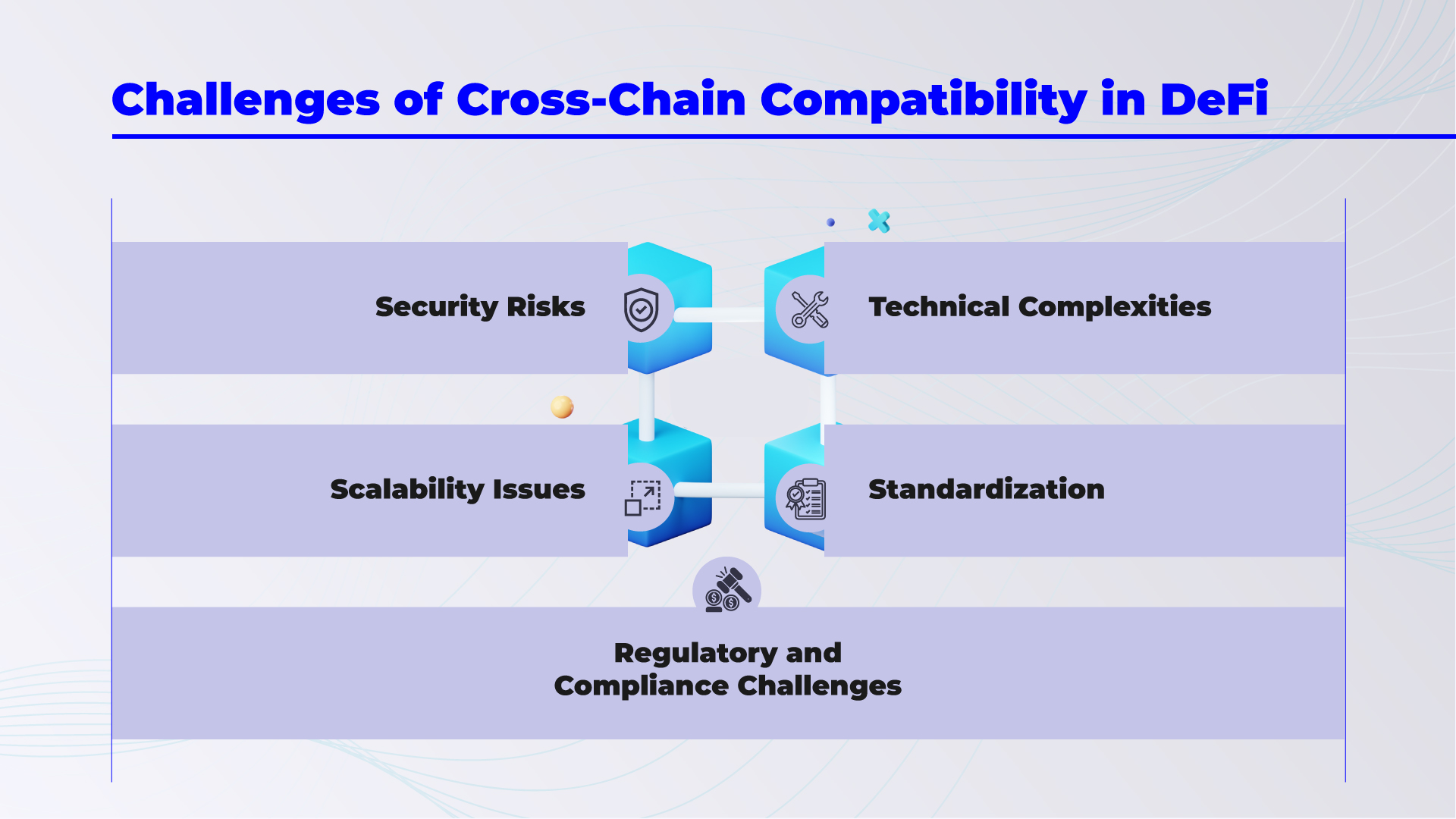
Lack of Standardization
There isn’t any common commonplace for cross-chain compatibility, and this could result in fragmentation and inefficiencies. Completely different initiatives might use completely different strategies for cross-chain communication, inflicting inconsistencies and issues with interoperability. To unravel this, it’s important to create and undertake widespread requirements for seamless integration between blockchains.
Regulatory and Compliance Challenges
Cross-chain compatibility additionally faces regulatory hurdles. Making certain that cross-chain transactions adhere to monetary laws in varied areas could be difficult. This will result in authorized uncertainties and difficulties for DeFi initiatives attempting to function throughout completely different regulatory environments.
Way forward for Cross-Chain Compatibility in DeFi
Because the DeFi house continues to evolve, cross-chain compatibility shall be key to unlocking its full potential as it would play a key position in increasing the ecosystem. We will anticipate to see extra hybrid DeFi platforms that mix the strengths of varied blockchains. This can result in larger liquidity and higher market effectivity and appeal to extra contributors to the DeFi house.
Additionally, interoperability protocols and blockchain bridging applied sciences will maintain evolving. So, we are able to anticipate extra seamless interactions between DeFi platforms. Extra importantly, we’re prone to see the event of industry-wide requirements that can simplify communication between completely different blockchains. These common requirements are important for cross-chain compatibility in DeFi to thrive.
Lastly, the consumer expertise in DeFi will enhance considerably. We’ll see extra user-friendly interfaces, smoother asset transfers, and decrease transaction charges. These enhancements will make DeFi extra accessible and easier to make use of, providing a extra intuitive expertise for everybody.
In conclusion, the initiatives and applied sciences main this cost for cross-chain compatibility in DeFi aren’t simply fixing in the present day’s issues however are laying the groundwork for a extra inclusive and environment friendly monetary future.
Disclaimer: This text is meant solely for informational functions and shouldn’t be thought of buying and selling or funding recommendation. Nothing herein must be construed as monetary, authorized, or tax recommendation. Buying and selling or investing in cryptocurrencies carries a substantial threat of monetary loss. At all times conduct due diligence.
If you need to learn extra articles (information reviews, market analyses) like this, go to DeFi Planet and observe us on Twitter, LinkedIn, Fb, Instagram, and CoinMarketCap Neighborhood.
“Take management of your crypto portfolio with MARKETS PRO, DeFi Planet’s suite of analytics instruments.”